
Ditch: Pay Off Debt Faster
Ditch Technologies, IncFinance
4.862.00 Reviews
- Version
- 1.5.6
- Installs
- 10.00K
- Age Rating
- Everyone
Screenshots
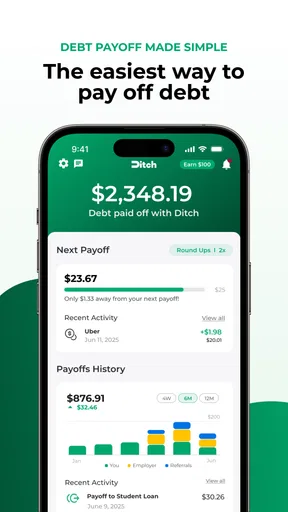
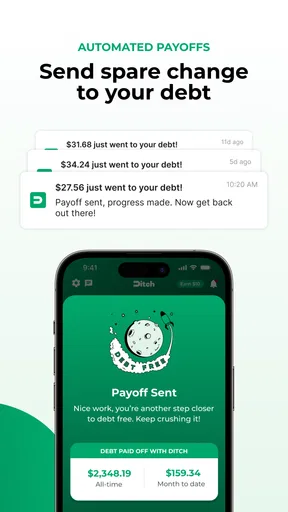
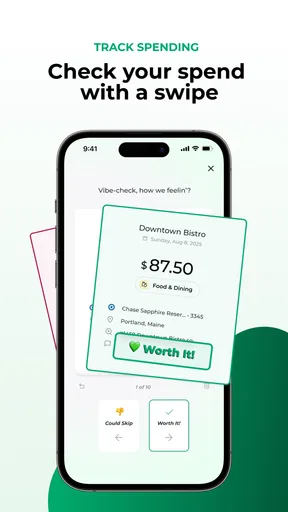
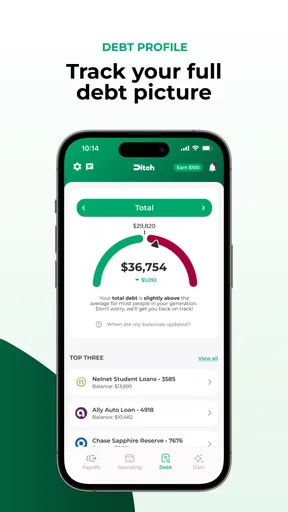
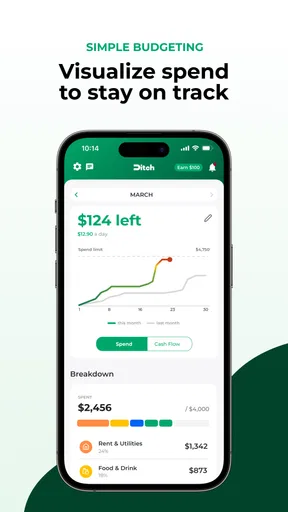
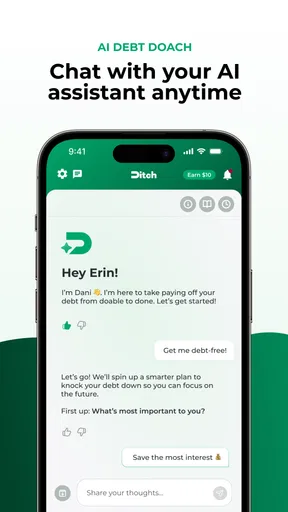
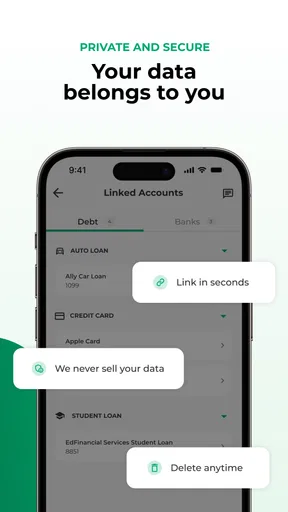
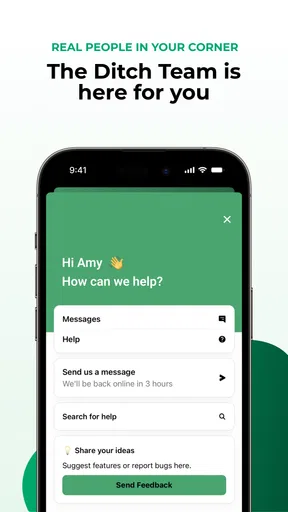
Our Review of Ditch: Pay Off Debt Faster
 Analysis by Appyee
Debt repayment is usually less about finding one perfect trick and more about turning a scattered set of balances into a plan you can actually follow. Ditch: Pay Off Debt Faster takes that practical problem as its starting point. It is a finance app from Ditch Technologies, Inc that focuses on organizing payoff progress and helping you keep attention on the next useful step rather than staring at a confusing pile of bills.
After spending time with it, my overall view is positive but measured: Ditch is most useful for someone who wants a dedicated debt workspace instead of a general budgeting app. Its appeal is the combination of payoff planning and progress tracking. It does not try to be your entire financial life, and that narrow focus is both its strongest quality and its main limitation.
What Ditch does well when debt feels difficult to manage
The first thing I noticed is that the app makes debt feel like a project with visible movement. That sounds simple, but it matters. When several balances compete for attention, people often make payments without having a clear sense of how those payments fit together. A focused payoff tool gives each balance a place in the larger plan, which can make routine decisions feel less random.
I especially like the idea of using Ditch as a regular check-in rather than opening it only when a bill is due. A short weekly review can help you see whether your planned payment still matches reality, whether an unexpected expense has changed the month, and whether your payoff direction still feels manageable. The value is not just in entering information once; it is in creating a repeatable habit around the debt.
The app’s store summary, “Automate Payoff & Track Debt,” points to that two-part purpose. Tracking gives you visibility, while automation is intended to reduce the mental work involved in keeping a repayment plan moving. For me, that distinction is important. A calculator can show a result, but a useful debt app should also help reduce the number of decisions you need to make every payday.
A realistic example is a person with a credit card balance, a personal loan, and a medical bill. Without a central view, it is easy to remember the credit card and mentally push the other two into the background. With Ditch, the goal is to bring those obligations into one repayment conversation: what needs attention now, what can wait, and how does an extra payment change the overall path? That kind of overview is more useful than a motivational slogan because it connects encouragement to a concrete action.
Why a dedicated payoff view can beat a general budget
General budgeting apps are often excellent at showing income, spending categories, and account activity. They are not always designed around the emotional and practical rhythm of paying down debt. A debt-focused app can be better when your immediate priority is reducing balances rather than optimizing every category in your household budget.
I would use Ditch alongside a broader budget, not necessarily instead of one. The budget tells me whether I can afford groceries, transport, subscriptions, and irregular expenses. Ditch can then give the debt portion of that picture a clearer destination. Keeping those roles separate may actually make both tools easier to understand: one explains cash flow, while the other keeps repayment progress visible.
That separation also helps avoid a common mistake. A person can make aggressive debt payments and still run short before the end of the month if everyday spending is not being watched. Ditch may help organize the payoff side, but it should not be treated as permission to ignore the rest of the household finances. I would first decide on a realistic amount that can be paid consistently, then use the app to keep that commitment organized.
Small workflows that make the app more useful
One useful workflow is to create a “before payday” review. I would open the app shortly before income arrives, check the planned repayment amount, and compare it with upcoming essentials. This is a better moment for adjustment than the day after money has already been distributed. It also turns the app into part of a routine instead of a place I visit only after missing something.
A second workflow is to record the reason for any temporary change in payment. If a payment is lower because of a car repair or a seasonal expense, that context matters. Otherwise, a later look at the plan can make a normal interruption feel like failure. Treating an uneven month as information rather than defeat makes it easier to resume the plan without abandoning it.
A third insight is to use progress tracking as a decision aid, not just a scoreboard. When extra money becomes available, I would compare the effect of directing it toward debt with the need to keep a small cash cushion. Paying down a balance faster can feel satisfying, but using every spare dollar may create a new emergency balance later. Ditch is most helpful when it supports a sustainable choice rather than pushing me toward the most dramatic-looking number.
These workflows are not flashy features, but they are where a focused app can become genuinely useful. The payoff system works best when it is connected to the calendar, the pay cycle, and the unpredictable expenses that make real financial plans messy.
What the ratings and presentation suggest
Ditch has an average rating of 4.8 from around 1.1 thousand ratings, with more than sixty written reviews. That level of response suggests that the app’s focused purpose is resonating with a meaningful group of users. I would still treat ratings as a starting point rather than proof that it will fit every financial situation. Debt management is personal, and an app that feels clear to one person may feel too narrow to another.
The app has passed ten thousand installs, which gives it a modest but established presence rather than making it feel like an entirely untested experiment. It was released on September 12, 2023, and the current version is 1.5.6. Those details matter mainly because finance tools need ongoing attention: a user should care about whether the app is still being maintained and refined, not just whether its idea sounds good.
It is free to install, although in-app purchases range from $5.99 to $89.99 per item. That makes it important to approach the app with a clear idea of what you need before committing to any paid option. I would begin with the free experience, learn whether the workflow fits my habits, and only then consider spending money on additional access. A debt tool should save mental energy, but its cost also belongs in the financial plan.
Where Ditch may frustrate careful users
The biggest limitation is that a debt payoff app cannot remove the underlying financial pressure. It can organize balances and support a plan, but it cannot make an unaffordable payment affordable. If your income changes frequently, your bills are already overdue, or you are relying on new borrowing to cover essentials, a clean-looking payoff screen may create a false sense of control. In that situation, I would prioritize a full review of income, expenses, and creditor obligations before relying on any automated plan.
Automation deserves particular caution. Automating a payment can reduce forgetfulness, but it can also cause trouble when the linked cash flow is unpredictable. I would not set a repayment amount and then stop checking my bank balance. A scheduled payment that leaves too little for rent, food, or utilities is not a successful optimization. The safest approach is to review the plan around each pay cycle until the amount has proved comfortable across ordinary months.
Another trade-off is the app’s narrow focus. Someone looking for investment tracking, detailed spending categorization, shared household budgeting, or a complete account dashboard may find a general finance app more suitable. Ditch’s strength is concentration. If you want one application to explain every part of your financial life, its debt-first design may feel incomplete rather than refreshing.
I also would not choose it as my only source of truth for serious financial decisions. I would verify balances and payment confirmations through the relevant lender or bank, especially after making changes. A tracker is helpful for planning, but official account records remain important when interest, fees, due dates, or disputes are involved. That is not a criticism unique to Ditch; it is a sensible boundary for any financial organizer.
The purchase structure may also require restraint. The app is free, but the presence of paid items means users should understand what they are paying for before approving anything. For a person already under financial stress, an expensive upgrade can be counterproductive if it is bought out of frustration or optimism. My advice is simple: use the app long enough to identify a specific problem it solves, then decide whether the cost is justified by that benefit.
Who should use it and who should look elsewhere
I think Ditch is a strong fit for someone who has multiple debts, wants a dedicated payoff plan, and benefits from seeing progress in one focused place. It is particularly appealing if you are motivated by visible milestones but do not want to build a spreadsheet from scratch. The Everyone age rating also makes it broadly accessible as a consumer finance app, although younger users should still involve a trusted adult when repayment decisions affect shared bills or legally significant accounts.
It can also suit a person who has tried to repay debt before but keeps losing track after the first burst of motivation. The useful question is not whether the app can make you feel inspired on day one. It is whether its tracking and payoff structure can help you return on an ordinary Tuesday when the balance has not changed dramatically. That is where a focused routine earns its place.
I would recommend a different kind of tool to someone whose main problem is overspending visibility. If you do not know where your money goes each month, start with a budget that gives spending and cash flow equal attention. Ditch can become the debt component later, but it should not replace the basic work of understanding recurring costs and irregular obligations.
I would also be cautious if your debts involve complicated legal arrangements, collection activity, or repayment terms that require professional advice. An app can help you stay organized, but it is not a substitute for speaking with a qualified financial counselor or reviewing creditor documentation carefully. In those cases, organization is useful, but interpretation is the harder problem.
How I would set it up for everyday use
I would begin by entering only information I can verify, then check each balance against the lender’s current record. That prevents a small starting error from shaping the entire payoff picture. I would also avoid promising an ambitious payment simply because the projected finish looks attractive. A lower amount that survives an expensive month is more valuable than a perfect plan that collapses quickly.
Next, I would choose one regular review day and keep it short. The purpose would be to confirm the next payment, notice changes, and record progress. I would not reopen the entire strategy every day. Constant checking can turn a helpful tracker into another source of anxiety, while a predictable weekly or payday routine keeps the app practical.
Finally, I would pair the app with a small emergency buffer whenever possible. This is one of the less obvious trade-offs in debt repayment: the fastest mathematical route is not always the safest personal route. If an unexpected expense immediately goes back onto a credit card, a slightly slower plan with some cash flexibility may produce better real-world progress.
On Android, the app requires at least version 8.0 of the operating system. That makes it accessible to many existing devices, though I would still keep the phone’s operating system and the app itself reasonably current when using a finance tool. The current release, version 1.5.6, is the one I would install before judging the experience, since updates can affect usability and reliability.
My final recommendation
Ditch succeeds because it keeps its attention on a problem that broad finance apps often treat as just one small section: getting out of debt and staying aware of the progress. I like its focused identity, its potential to turn repayment into a repeatable routine, and the way it can give a person a clearer place to review next steps. The strongest results will come from using it deliberately, especially around payday and before committing to automated payments.
Its limits are just as important. It is not a complete household budget, it cannot solve an income shortfall, and automation still needs human oversight. The paid options also mean I would test the free experience before spending anything. If your financial life is complicated beyond ordinary tracking and payoff planning, another tool or professional guidance may be the better foundation.
For someone who wants a focused debt companion rather than an all-purpose money dashboard, I would recommend giving Ditch: Pay Off Debt Faster a careful try. Its best feature is not a dramatic promise of instant freedom; it is the quieter benefit of making repayment visible, reviewable, and easier to keep in motion. Used with a realistic budget and regular account checks, it can become a practical part of a debt-free plan.
Verdict
Strengths of Ditch: Pay Off Debt Faster
- Clear debt payoff tracking keeps progress easy to monitor.
- Supports focused repayment planning instead of vague financial goals.
- Helpful reminders can encourage consistent payments and check-ins.
- Simple design makes the app approachable for first-time budget planners.
- Useful for comparing repayment progress over time.
Limitations of Ditch: Pay Off Debt Faster
- Some features may require entering detailed debt information manually.
- Limited value if your lender balances are not updated regularly.
- Debt strategies may not suit users with irregular income.
- Personal finance data requires careful attention to privacy settings.
- Results depend on disciplined payments, not the app alone.
Similar Picks in This Category
View All
Google Wallet
Google LLC4.3

Airtel: Recharge, Bank & Loans
Airtel4.0

PayPal - Pay, Send, Save
PayPal Mobile4.2

DANA Indonesia Digital Wallet
PT Espay Debit Indonesia Koe4.5

Binance: Buy Bitcoin & Crypto
Binance Inc.4.8

Cash App
Block, Inc.4.7
Frequently Asked Questions
What is Ditch: Pay Off Debt Faster, and how does it work?
Ditch: Pay Off Debt Faster is a debt-management app designed to help you organize outstanding balances and create a clearer repayment strategy. After entering information such as balances, interest rates, minimum payments, and due dates, the app can help you understand your debt and compare possible payoff approaches. It is primarily a planning and tracking tool, not a lender or debt-consolidation service.
Can Ditch help me choose the best debt repayment method?
The app is useful for comparing common repayment strategies, such as focusing on the debt with the highest interest rate or paying off the smallest balance first. The most suitable approach depends on your interest charges, income, minimum payments, and personal motivation. Ditch can make the numbers easier to understand, but its suggestions should be treated as educational guidance rather than personalized financial advice.
Is Ditch safe to use with my financial information?
Before adding sensitive details, review the app’s current privacy policy, permissions, and data-handling practices in the App Store or Google Play listing. Avoid entering bank passwords, card PINs, or account credentials unless the app clearly explains why they are required and how they are protected. Using approximate figures can also help you plan while limiting the amount of personal information stored.
Does Ditch connect directly to my bank or credit-card accounts?
Whether automatic account connections are available may depend on the current version of the app, your location, and the supported financial institutions. If linking accounts is offered, check which provider handles the connection and what information is imported. Users who prefer more control can generally plan with manually entered balances, although manual tracking requires regular updates whenever payments, interest, or new charges change the totals.
Is Ditch free, and can it actually pay my debts for me?
Ditch should be viewed as a budgeting and repayment-planning companion rather than a payment service. It does not eliminate debt, negotiate with creditors, or make payments automatically unless those features are explicitly stated in the current listing. Check the download page for subscription terms, premium tools, trial conditions, and cancellation instructions. You remain responsible for paying creditors on time and verifying every amount.
